
Iranian and Russian Universities Hold Coordination Meeting to Expand Academic Cooperation
Iranian and Russian Universities Hold Coordination Meeting to Expand Academic Cooperation
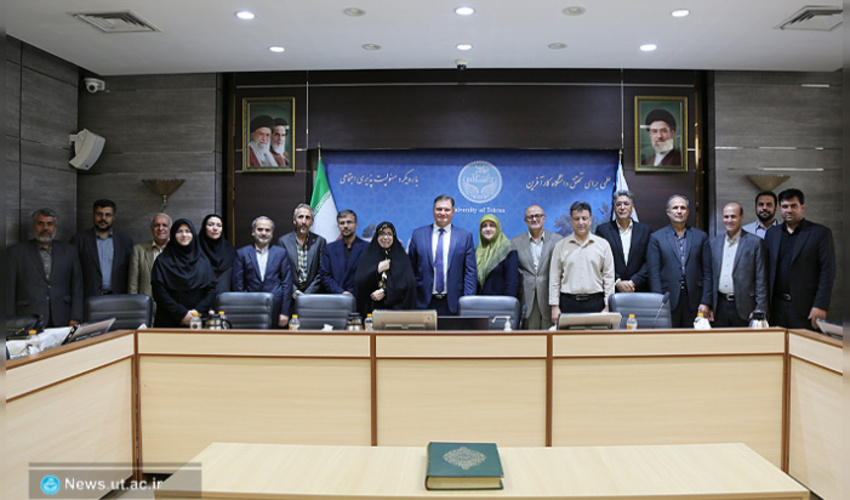
According to the University of Tehran Public Relations Office, a coordination meeting on the expansion of academic cooperation between Iran and Russia was held on Sunday, July 26, 2026 (4 Mordad 1405), at the University of Tehran. The meeting brought together vice presidents and representatives of leading universities from both countries.
The session focused on coordinating the implementation of existing memoranda of understanding (MoUs) between top Iranian and Russian universities, emphasizing scientific diplomacy and the establishment of a joint executive committee to deepen bilateral cooperation. Participants also discussed new horizons for scientific relations between Iran and Russia.
The meeting was attended by the Russian Science Counselor in Iran and representatives of the Russkiy Mir Foundation, who reviewed the current status of cooperation between the universities of the two countries and discussed preparations for the Eighth Iran–Russia Universities Summit.
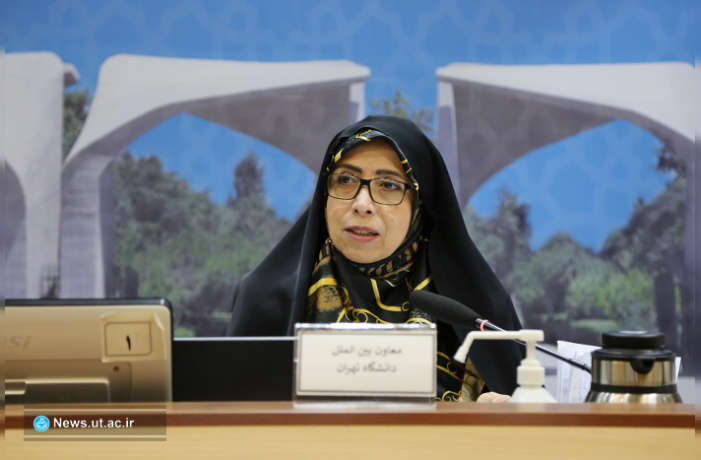 Dr. Elham Aminzadeh, Vice President for International Affairs at the University of Tehran, presented a report on the international activities of Iran's leading universities. She referred to the successful "New Horizons in International Scientific Activities" summit and announced that the upcoming meeting would focus on addressing current challenges, enhancing resilience during crises, engaging Iranian scholars residing abroad, and developing new models of short-term, virtual, skills-based education.
Emphasizing the need to redefine academic relations under sanctions, she stated: "Academic cooperation requires us to examine how we can establish effective partnerships with other universities while operating in a region affected by sanctions."
Dr. Aminzadeh also highlighted the University's international student admissions, noting that approximately 3,300 applications were received from international applicants last year. Following consular review, 364 students completed their enrollment, with 59 percent admitted to doctoral programs.
Scientific Diplomacy Alongside Official Diplomacy
Underscoring the importance of scientific diplomacy, Dr. Aminzadeh noted that since the outbreak of the recent war, the University of Tehran has established communication with more than 300 distinguished universities across Europe, the Americas, Asia, and Africa. She also announced an agreement with a South Korean scientific foundation to establish a Korean Language program at the University of Tehran.
She added that participants in the "New Horizons" summit agreed to strengthen scientific diplomacy alongside official diplomacy, emphasizing that academic cooperation can help address major challenges, including combating negative perceptions of Iran by developing a resilient scientific ecosystem.
Dr. Aminzadeh further stated that the University of Tehran has signed more than 600 international agreements, stressing that the University's objective is to pursue effective diplomacy rather than symbolic diplomacy.
Iran–Russia Universities Summit: Past Achievements and Future Plans
Reviewing the history of the Iran–Russia Universities Summit, Dr. Aminzadeh explained that the initiative was launched in 2015 through the efforts of the presidents of the University of Tehran and Lomonosov Moscow State University. The University of Tehran serves as the secretariat in Iran, while Moscow State University fulfills this role in Russia. The seventh and most recent summit was held at the University of Tehran in 2024.
She outlined the major areas of cooperation during the previous seven summits, including faculty and student exchanges, summer and winter schools, access to Russian laboratory facilities, cooperation within the BRICS framework, the establishment of a BRICS-specific university ranking system, the expansion of Persian and Russian language education, and the organization of professional training courses and webinars.
Dr. Aminzadeh emphasized the necessity of establishing a Permanent Committee for Cooperation among Leading Iranian and Russian Universities to evaluate existing shortcomings and facilitate future collaboration. She identified maritime economy, artificial intelligence, and other emerging fields as promising areas for joint research.
She further stated that the objectives of the current meeting included determining the members of the permanent secretariat, allocating office space and personnel, planning the agenda of the Eighth Summit, establishing a joint executive working group, deciding on the venue and schedule, estimating the required budget, and facilitating visa procedures and security clearances.
 Emphasis on Practical Outcomes
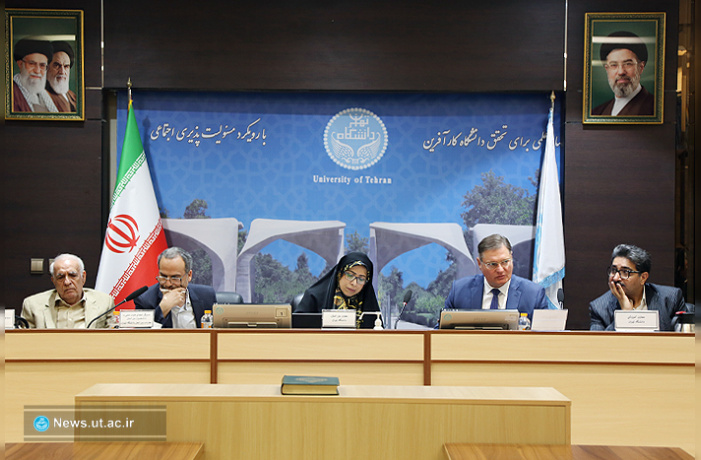
Dr. Mahmoudreza Delavar, Director General for International Faculty Members and Students at the University of Tehran, remarked that the outcomes of the previous seven summits had largely remained limited to general areas such as faculty and student exchanges and joint academic planning. He expressed hope that the eighth summit would produce more tangible and operational results.
He also proposed the establishment of a Joint Financial Fund to support collaborative research projects.
Dr. Delavar identified aerospace, the maritime economy, steel industries, transportation, and geophysics as priority areas for cooperation between Iranian and Russian universities. He concluded by emphasizing the formation of a joint committee comprising five universities from each country to oversee the implementation of bilateral agreements.
Reviewing Existing Agreements
Igor Demkin, Science and Technology Counselor at the Embassy of the Russian Federation in Iran, stated that only about 30 percent of the cooperation potential between the two countries has been utilized.
He noted that approximately 350 agreements have been signed between Iranian and Russian universities, yet only 10 to 15 percent have been effectively implemented. He explained that before the war, numerous Russian academic delegations visited Iran and signed many agreements, but a considerable number of them were never put into practice. He stressed the need to distinguish essential agreements from non-essential ones, adding that the next two years present a valuable opportunity for expanding strategic academic cooperation.
During the meeting, Dr. Marzieh Yahyapour, President of the Russkiy Mir Foundation in Iran, presented a report on the Foundation's activities in promoting the Russian language and literature.
Dr. Mirei, Director General of Educational Services at the University of Tehran, also emphasized the importance of launching joint undergraduate degree programs with Moscow universities and making greater use of continuing education opportunities.
Resolutions Adopted
At the conclusion of the meeting, participants approved the following measures:
- Mutual reduction of visa fees for faculty members and students of both countries;
- Expansion of cooperation in maritime economy, transportation and international corridors, artificial intelligence, Russian language and literature, energy, quantum technologies, sanctions and crisis management, cybersecurity, and agriculture;
- Implementation of joint research projects with the Russian Academy of Sciences;
- Revision of the list of Russian universities approved by Iran's Ministry of Science, Research and Technology;
- Establishment of a Joint Financial Fund to support collaborative projects; and
- Formation of a follow-up committee composed of five universities from each country, selected according to their areas of expertise, to oversee the implementation of bilateral agreements.
Your Comment :