
The National Conference on New Horizons in International Scientific Activities of Universities, and Educational, Research and Technological Institutions and Centers of Islamic Republic of Iran
The National Conference on New Horizons in International Scientific Activities of Universities, and Educational, Research and Technological Institutions and Centers of Islamic Republic of Iran
The National Conference on New Horizons in International Scientific Activities of Universities, and Educational, Research and Technological Institutions and Centers of Islamic Republic of Iran

The UT Vice Presidency for International Affairs, in collaboration with the TUMS (Tehran University of Medical Sciences) Vice Presidency for International Affairs organized The National Conference on New Horizons in International Scientific Activities of Universities, and Educational, Research and Technological Institutions and Centers of Islamic Republic of Iran on June 15-16, 2026 at the Allameh Amini Hall of the Central Library of UT.
The conference was held with the aim of studding and addressing challenges in the international scientific activities of universities and research institutes, while also strengthening the country’s scientific diplomacy. The event brought together officials from the Ministry of Science, Research and Technology; the Ministry of Health and Medical Education; and the Ministry of Foreign Affairs, as well as members of Parliament, representatives of executive agencies, and international affairs managers and experts from universities and research centers across Iran.
At the opening ceremony, following the welcoming remarks, speeches were delivered by Dr. Elham Aminzadeh, Vice President for International Affaires of UT; Dr. Mohammad-Hossein Omid, President of UT; Dr. Seyed Reza Raees-Karami, President of TUMS; Dr. Alireza Monadi Sepidan, Chairman of the Parliamentary Commission on Education, Research and Technology; Dr. Seyed Mehdi Abtahi, Deputy Minister for Research at the Ministry of Science, Research and Thechnology; and Hojjatoleslam Dr. Mostafa Rostami, Head of Supreme Leader’s Representative Office in Universities.
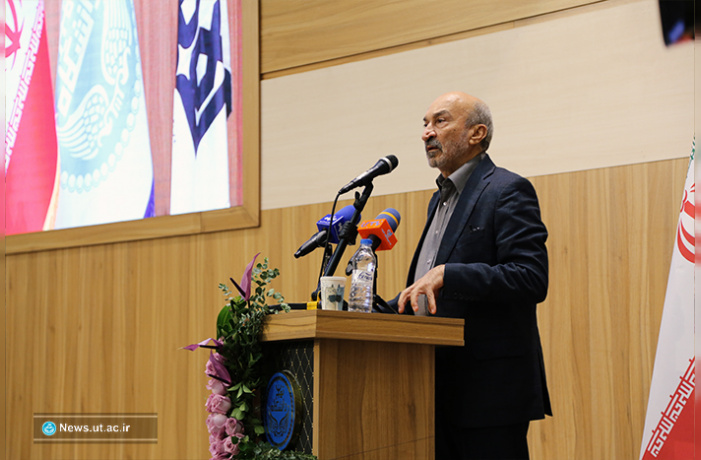 According to the UT Public Relations Office, Dr Mohammad-Hossein Omid, President of UT, emphasized the need to remove structural and financial berries to maximize the recruitment of international students during the opening ceremony of the Conference.
At the beginning of his remarks, Dr. Omid paid tribute to the memory of the Martyred Leader of Iran, military commanders, and other martyrs of the Ramadan War. He also extended his condolences on the martyrdom of two distinguished UT professors, Dr Ali Larijani and Dr. Kamal Kharazi, expressing hope that the country’s academic community would continue their path in advancing science and technology and safeguarding their achievement.
Highlighting the importance of international engagement in attracting talent, the President of UT noted that in today’s advanced world, all leading universities strive to attract the largest possible number of international students and faculty members.
Another key theme of Dr. Omid’s speech was the effort to consolidate and enhance the international scientific standing of Iran and UT. He stressed that, due to ongoing conflicts, severe sanctions, and domestic constraints, universities had experienced setbacks during the current year. He warned that unless compensatory measures are implemented during the second half of the current calendar year, Iran could face a decline in its international academic position.
Addressing the challenges facing the development of international scientific cooperation, Dr. Omid identified two principal obstacles: certain existing laws and regulations, and the procedures and perspectives adopted by executive agencies. He particularly highlighted serious difficulties in transferring financial resources for the admission and exchange of students, the procurement of equipment, and the implementation of joint research projects, stating that “these activities are confronted with considerable challenges.”
A major point emphasized by the President of UT was the target set in Iran’s Seventh Development Plan to enroll 320,000 international students. Referring to this goal, he stated: “Although this is an ambitious target, it is entirely achievable by drawing on the tremendous capacities of our faculty members and the facilities available at the country’s leading universities, particularly the UT and TUMS. However, this will require the removal of bureaucratic obstacles by both the government and Parliament so that, in the near future, we will not face criticism for falling to achieve these objectives.”
Referring to the establishment of international centers by UT and TUMS in Baghdad, and emphasizing Iran’s role as a scientific hub for the Islamic World, Dr. Omid stated: “The presence of international students in Iran is even more effective than joint scientific publications. A student who spends several years studying in Iran returns home as a cultural and scientific ambassador for our Country.”
Dr. Omid also highlighted the role of scientific diplomacy during times of crisis, stating: “Our experience of corresponding with more than 300 institutions and organizations around the world to explain the hardships faced by our country and universities generated positive responses. These connections will now contribute to strengthening scientific diplomacy in the post-war period.”
Concluding his remarks, the President of UT emphasized the need to expand international students recruitment beyond neighboring countries and to focus increasingly on Central Asia, followed by the other regions in both the East and the West. He noted that UT and TUMS would deploy specialized academic delegations to different parts of the world in order to play their part in achieving the objectives of the Seventh Development Plan regarding international students enrollment.
Dr. Omid further called on the officials and international affairs experts attending the conference to identify and document the obstacles hindering the internationalization of Iranian universities. He stressed that a comprehensive list of these challenges should be submitted to the relevant authorities so that effective measurers can be taken to streamline financial and administrative procedures for international students and faculty members, thereby facilitating greater international academic engagement.
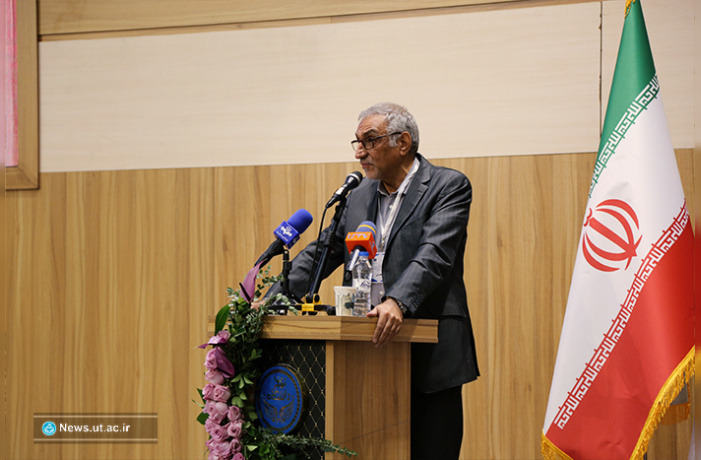 Dr. Seyed Mehdi Abtahi, Deputy Minister for Research at the Ministry of Science, Research and Technology, was another keynote speaker at the opening ceremony. He emphasized the need to move from a defensive approach toward active scientific diplomacy, describing it as a key factor in enhancing Iran’s standing in the international arena.
Highlighting the changing circumstances in the post-war period and the limitations on available resources, Dr. Abtahi called for a reassessment of strategies governing international scientific engagement. He stressed the importance of shifting from a predominantly security-oriented and defensive mindset to a proactive approach, strengthening the role of scientific attaches, and prioritizing technology transfer rather than merely importing production lines and equipment.
A further focus of his remarks was the utilization of regional opportunities and the prioritization of national interests. Referring to the resource constraints and extensive reconstruction needs that often follow periods of conflict, he emphasized that national interests must serve as the primary guiding principle in policymaking and decision-making.
Pointing to Iran’s proven capabilities in various scientific and technological fields, Dr. Abtahi identified Central Asia as a particularly promising region for scientific and research collaboration, citing both the shortage of researchers in the region and the existence of shared cultural ties.
He also underscored the need to streamline executive structures and improve the quality of international admissions. Criticizing the lack of coordination among different institutions involved in international engagement, he referred to what he described as a degree of “institutional fragmentation” in the mandates of various organizations. He called for a clear delineation of responsibilities to prevent overlap in agreements and implementation processes.
Dr. Abtahi further stressed the importance of strengthening the position of Iran’s scientific Embassy Counselor, noting: “A country with Iran’s scientific and technological capacities should provide more adequate support and resources for its scientific representatives so that they can play a more active role on the global stage.”
He also emphasized the necessity of maintaining high-quality standards in the admission of international students to avoid repeating previous experiences associated with low-quality recruitment practices.
Another major theme of his address was “From Industrial Reconstruction to Technology Transfer: Beyond the Import of Equipment.” Analyzing the current state of the country’s industries, he warned that efforts to restore industrial production should not be limited to purchasing and importing manufacturing lines. He stated: “In the past, complete production systems were often imported without any meaningful transfer of technology, a practice that ultimately did not serve the country’s long-term interests. Academic institutions must play a more active role in fostering international partnerships that facilitate genuine technology transfer, enabling the reconstruction of national industries on the basis of indigenous expertise and acquired technological knowledge.”
Scientific Branding and a Shift in the Security Paradigm, from Defense to Engagement constituted another important aspect of Dr. Abtahi’s remarks. Drawing inspiration from China’s successful experience in scientific development, he emphasized the need to make effective use of the country’s internationally recognized scientific brands and leading universities. He stated: “The utilization of these capacities should not depend on individual preferences. Leading universities must take the initiative in international engagement. A defensive outlook and constant concern about external influence have often impeded major progress. China’s extensive academic presence in the United States and its success in acquiring scientific and technological knowledge are the result of a proactive vision and clear strategic planning, rather than purely defensive approaches.”
Another key topic addressed by the Deputy Minister was the circulation of talent and the redefinition of scientific diplomacy. In concluding his remarks, he discussed the concept of “elits circulation”, stating: “The objective is not necessarily the physical return of all highly skilled Iranians living abroad, but rather the effective utilization of their expertise and capacities in education and research, wherever they may reside.”
 Dr. Seyed Reza Raees-Karami, President of TUMS, stated in his opening address that internationalization is a strategic necessity for strengthening Iran’s scientific authority and enhancing its global impact.
Emphasizing the pivotal role of universities as key actors in scientific diplomacy and innovation, Dr. Raees-Karami described internationalization not as a matter of choice, but as a strategic imperative for improving the quality of education, attracting top talent, and reinforcing Iran’s position within the global network of science and technology.
During the conference, Dr. Raees-Karami highlighted the tangible achievements of Iran’s scientific engagement in the region and announced that the first undergraduate cohort of Al-Sibtain University, the international branch of TUMS in Karbala, will commence studies this year. Referring to Iran’s pioneering role in providing specialized educational services, he stated: “We established Iraq’s first Faculty of Rehabilitation Sciences in Karbala. Prior to this initiative, no such faculty existed in Iraq, and rehabilitation disciplines were offered only on a limited scale. Today, specialized academic programs developed by TUMS are being delivered in Iraq, and there has been strong interest from both the Iraqi Ministry of Health and the Ministry of Higher Education in benefiting from Iran’s scientific and educational capacities.”
Dr. Raees-Karami described universities as the driving force behind scientific diplomacy and the resolution of global challenges, emphasizing: “Universities are no longer merely institutions for education and knowledge production. In today’s world, they have become central actors in scientific diplomacy, sustainable development, and the resolution of global challenges. As the boundaries of science continue to diminish, the influence of a university increasingly depends on the quality and breadth of its international collaborations. Accordingly, the principal priorities of Tehran University of Medical Sciences include strengthening health diplomacy, implementing joint international research projects, attracting international students, and maintaining an active presence in global scientific associations and networks, all with the aim of enhancing the country’s scientific authority.”
The President of TUMS further identified national synergy and coordination as a prerequisite for success on the international stage. Referring to Iran’s substantial human capital and scientific infrastructure, he stressed that meaningful achievements in global arenas require close cooperation among universities, executive agencies, and policymaking institutions. Such coordination, he noted, is essential for making the most effective use of the country’s scientific capacities.
In conclusion, Dr. Raees-Karami described the joint conference organized by the UT and TUMS as a symbol of this collaborative spirit. He expressed hope that this model of cooperation between the country’s two leading academic institutions would contribute to the development of practical solutions for overcoming legal and administrative barriers and facilitate a more effective path toward international scientific engagement.
 Dr. Elham Aminzadeh, Vice President for International Affairs of UT, stated in her opening speech at the conference that academic diplomacy is a strategic instrument for breaking the chains of sanctions and confronting scientific apartheid. Emphasizing the convergence of efforts by the country’s two leading universities, she described scientific interactions as extending far beyond student recruitment and the signing of memoranda of understanding.
Referring to the concept of “scientific apartheid” in relation to unequal access to fundamental technologies, Dr. Aminzadeh introduced academic diplomacy as a key instrument for countering Iranophobic narratives and redefining Iran’s role in the global power structure.
She described the organization of the event not as a routine conference, but as a strategic and operational initiative for the country’s scientific and political future.
She stated: “Today, the boundaries between official diplomacy and scientific diplomacy are more intertwined than ever before. If universities are unable to connect with global networks of knowledge and expertise and utilize their capacities to address international challenges, the country’s hard power will also face constraints.”
Explaining a new approach to global engagement, the Vice President for International Affairs of UT described academic diplomacy as the frontline mechanism for breaking sanctions chains and an effective tool for neutralizing campaigns of Iranophobia and anti-Iran sentiment. She added: “The ultimate goal of this approach is not merely attracting students or signing ineffective memoranda of understanding; rather, it is to create a resilient and influential scientific ecosystem capable of playing an active role in times of crisis.”
Dr. Aminzadeh continued by analyzing the challenges of international engagement and criticizing agreements that remain limited to paper commitments. She called for a transition toward results-oriented diplomacy and identified the following priorities as the roadmap for the country’s scientific diplomacy and the objectives of the conference:
- Diversification of educational models: Providing skill-based, professional, and online educational programs for young people in different countries alongside conventional degree-based education;
- A strategic approach to internationalization: Transforming the internationalization of universities from a “threat” into an “opportunity” and utilizing it as a form of “passive defense” to protect scientific assets during crises;
- Enhancing global standing: Developing practical strategies to improve the ranking and international position of Iranian universities in recognized global ranking systems;
- Utilizing scientific talent: Redefining cooperation horizons with Iranian experts and scholars residing abroad and pursuing the intelligent recruitment of international students.
She further emphasized the need to change perceptions regarding internationalization, arguing that it should be viewed not as a threat but as a unique opportunity and a form of passive defense for safeguarding the country’s scientific capital during times of crisis.
The Vice President for International Affairs of UT also stressed that synergy and cooperation with relevant governmental bodies and institutions to remove existing obstacles are prerequisites for effective management of scientific advancement under emergency conditions.
Confronting “scientific apartheid” and reclaiming the fundamental right of access to knowledge was another major theme of Dr. Aminzadeh’s remarks. Referring to restrictions caused by sanctions on access to scientific knowledge and basic and biotechnology fields, she described such limitations as a form of “scientific apartheid” and stated: “Academic diplomacy is part of fundamental human rights, and our universities must stand at the forefront of legal and diplomatic efforts to break these monopolies.”
 Dr. Alireza Monadi Sepidan, Chairman of the Parliamentary Commission on Education, Research and Technology, spoke about the Parliament’s emphasis on Iran’s scientific authority in the international arena and highlighted the close connection between scientific advancement and national strength.
Referring to the assassination of scientists and attacks on the country’s knowledge chain, the parliamentarian stressed the necessity of redefining standards for the admission of international students and safeguarding human capital in order to preserve Iran’s scientific reputation.
“The War Against Science: From Amir Kabir to the Assassination of Scientists and Students” was another theme addressed by Dr. Monadi Sepidan. Referring to Iran’s 1,700-year history of higher education and the continuation of the legacy of great scholars such as Avicenna and Nasir al-Din al-Tusi, he emphasized the continuous efforts by Iran’s adversaries to hinder the country’s scientific growth. He stated: “The history of political and scientific assassinations, from the killing of Amir Kabir to the martyrdom of recent scientists, demonstrates that the enemy has always sought to undermine Iran’s scientific progress. At the very moment when our leader was martyred, the enemy also killed 168 students, showing that its objective is to strike at the entire knowledge chain, from the beginning of that chain, namely students, to its final stage, represented by knowledge-based companies. These crimes must be presented to the world and pursued, as this approach is a repetition of the same path that led to the assassination of Amir Kabir.”
Regarding legislative support and the target of enrolling 320,000 international students, Dr. Monadi Sepidan stated that Parliament fully supports scientific development and identified the Knowledge-Based Economy Development Law as one of the effective instruments for achieving this goal. He also addressed the issue of improving faculty members’ livelihoods, stating: “For society to grow, professors must have adequate support, because faculty members are the driving force behind the country’s scientific progress.”
Addressing international academic interactions, the Chairman of the Parliamentary Commission on Education emphasized the need for careful supervision of international student recruitment in order to preserve Iran’s “scientific reputation and authority.” He warned that the Ministries of Science, Research and Technology and Health and Medical Education must prevent students from being sent to low-quality foreign universities.
Concluding his remarks, the Chairman of the Parliamentary Commission on Education expressed hope that, through the efforts of universities and the support of the government, the target of enrolling 320,000 international students would be achieved.
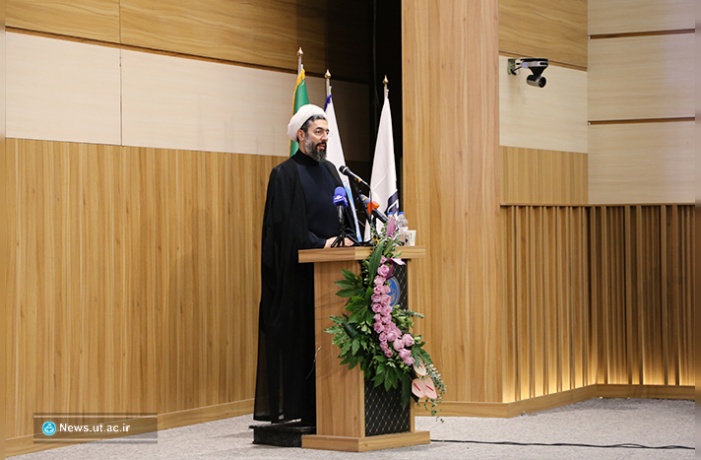 “Science as a Source of Power: The Need for Change in Documentation Practices to Ensure Scientists’ Security” was one of the key themes addressed by Hojjatoleslam Dr. Mostafa Rostami, Head of the Supreme Leader’s Representative Office in Universities, during the opening ceremony of the conference.
While commemorating the memory of those killed in the recent war, Dr. Rostami emphasized that the objective of hostile actions against scientists is to target Iran’s “scientific authority and power.”
He stated: “Wherever there is scientific advancement and the creation of national strength through knowledge, it becomes a target of adversaries. Therefore, changes in the methods of ‘scientific documentation’ are essential for explaining these crimes and strengthening the security of the country’s scientists.”
The Head of the Supreme Leader’s Representative Office in Universities described international students as cultural ambassadors whose role extends beyond material interests. Addressing the issue of international student recruitment, he emphasized the need to redefine standards and regulations in accordance with the cultural background and social environment of international students.
He stated: “In admitting international students, we should not focus solely on material aspects and financial benefits. Our goal is for these students to become representatives of Iranian culture and identity in their own countries. To achieve this objective, student recruitment missions and regulations must be redesigned in a way that, alongside quantitative expansion, preserves and enhances Iran’s scientific standing and credibility at the global level.”
Following the opening ceremony, four keynote speakers presented their perspectives:
Dr. Mahdi-Nejad Nouri, Deputy for Science, Research and Technology of the General Staff of the Armed Forces;
Dr. Mehdi Sobhani, Deputy Minister for Administrative and Financial Affairs of the Ministry of Foreign Affairs;
Dr. Alireza Biglari, Director General for International Cooperation at the Ministry of Health and Medical Education;
and the Advisor to the Minister of Interior.
Over the course of the two-day conference, five specialized sessions were held:
First Session: New Horizons in International Student Recruitment and Challenges and Experiences in Degree-Based, Skill-Based, Professional, Short-Term, and Virtual Education Programs
Speakers included:
Dr. Abbas Ghanbari Baghestan, Deputy for Scholarships and Overseas Students Affairs at the Organization of Student Affairs;
Dr. Hamidreza Danesh-Nadi, Director of International Scientific Cooperation at Ferdowsi University of Mashhad;
Dr. Akbari, Vice President for International Affairs of Iran University of Medical Sciences;
Dr. Naghi-Zadeh, Director General of the Office of Higher Education Planning at the Ministry of Science, Research and Technology;
Dr. Mohammad Shakerchi-Zadeh, Secretary of the National Committee of the International Association for the Exchange of Students for Technical Experience (IAESTE);
Dr. Seyed Mohammad Reza Khalili, Vice President for Research and Technology at the Comprehensive University of Applied Sciences and former Scientific Counselor of the Islamic Republic of Iran in the Indian subcontinent;
Dr. Mehrdad Ahmadi, Vice President for Research at the National University of Skills;
Dr. Saeed Shojaei, Advisor to the Vice President for Research and Technology of the University of Tabriz and Secretary of Region 3 of the National Working Group on International Student Recruitment.
Second Session: International Scientific, Technological, and Cultural Exchanges and Cooperation in Universities and International Associations; Strategies for Improving the Ranking of Iranian Universities and Analysis of the Challenges Behind the Non-Implementation of Memoranda of Understanding
Speakers included:
Eng. Alireza Hashemi, Director of International Affairs at the Center for Progress and Transformation Cooperation of the Presidency;
Dr. Mohammad Dehshiri, Dean of the School of International Relations at the Ministry of Foreign Affairs;
Dr. Omid Rezaei-Far, President of the Center for International Scientific Studies and Cooperation at the Ministry of Science, Research and Technology;
Dr. Yaghmaei, Director of International Relations at Tehran University of Medical Sciences.
Second Day Sessions: Tuesday, June 16, 2026
Third Session: New Horizons in Cooperation with Iranian Elites Abroad
Speakers included:
Dr. Alireza Hashemi Raja, Director General for Iranians Abroad Affairs at the Ministry of Foreign Affairs;
Dr. Mousa Bayat, Director General of the Office of Studies on Education and Culture Research at the Parliament Research Center;
Dr. Mansour Kanani, former Scientific Counselor of the Islamic Republic of Iran in Europe.
Fourth Session: Utilizing the Experiences of Successful Countries in Managing Education, Research, Healthcare, Treatment, and Public Health During Crises
Speakers included:
Dr. Ali Arab Khordmand, President of the Research Institute for Endocrine Sciences and Metabolism at Tehran University of Medical Sciences;
Dr. Hamed Sadeghi, Director of Scientific and International Cooperation at Sharif University of Technology;
Dr. Alireza Raeisi, Deputy Minister for Health at the Ministry of Health and Medical Education;
Dr. Amirhossein Takian, President of the Center for Global Health Excellence;
Dr. Rashidian, former Vice President for International Affairs of Tehran University of Medical Sciences.
Fifth Session: Capacities and Solutions for Addressing Existing Challenges in Relevant Institutions Involved in International Scientific Cooperation
Speakers included:
Dr. Reza Golshan Khas, Vice President for International Affairs at Iran University of Science and Technology;
Dr. Akhoundzadeh, Deputy Minister for Research and Technology at the Ministry of Health and Medical Education;
Dr. Taremi, Director General of Schools Abroad;
Dr. Maryam Eslami, representing Tehran University of Medical Sciences affiliated with Islamic Azad University;
Dr. Mojtaba Shasti Karimi, Director General of Consular Affairs at the Ministry of Foreign Affairs;
Dr. Kabiri, Advisor on university rankings at the Islamic World Science Citation Center (ISC).
At the closing ceremony, Dr. Kourosh Jafarian, Vice President for International Affairs of TUMS, and Dr. Elham Aminzadeh, Vice President for International Affairs of UT, presented a summary of the conference discussions and outcomes.
Your Comment :