
University Leaders Target 320,000 Foreign Students as Iran Rebuilds Global Scientific Standing Amidst Sanctions and ‘Scientific Apartheid’
University Leaders Target 320,000 Foreign Students as Iran Rebuilds Global Scientific Standing Amidst Sanctions and ‘Scientific Apartheid’
University Leaders Target 320,000 Foreign Students as Iran Rebuilds Global Scientific Standing Amidst Sanctions and ‘Scientific Apartheid’
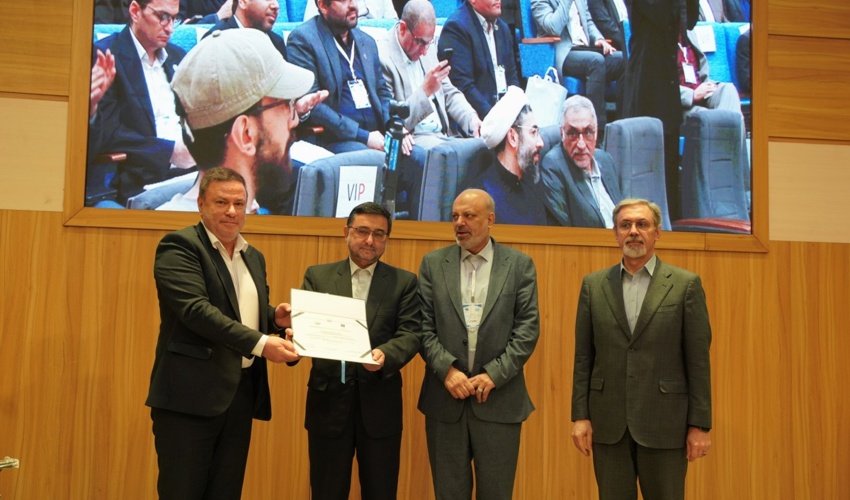
TEHRAN, Iran – June 20, 2026 – The University of Tehran, in collaboration with the Tehran University of Medical Sciences (TUMS), convened a landmark two-day national conference titled "New Horizons in International Scientific Activities of Universities, Institutions, and Educational, Research, and Technology Centers of the Islamic Republic of Iran." Held on June 25 and 26 at the Allameh Amini Hall of the Central Library, the event brought together top officials from three key ministries—Science, Research and Technology; Health and Medical Education; and Foreign Affairs—alongside parliamentarians, executive agency representatives, and international affairs experts from across the country's academic and research sectors.
The conference was designed as a strategic platform to diagnose and resolve obstacles hindering international scientific engagement, with a central focus on strengthening the nation's scientific diplomacy in the face of global challenges.
A Call to Overcome Structural and Financial Hurdles
In his opening address, Dr. Mohammad Hossein Omid, President of the University of Tehran, underscored the urgent need to remove structural and financial barriers to maximize the attraction of international students. He began by paying tribute to the memory of the martyrs of the recent war, as well as prominent University of Tehran professors Dr. Ali Larijani and Dr. Kamal Kharazi, urging the academic community to continue their legacy of scientific advancement.
Dr. Omid emphasized that top-tier universities globally are intensifying efforts to attract international students and faculty. He warned that due to "oppressive wars, heavy sanctions, and domestic limitations," Iranian universities have faced setbacks. He cautioned that without significant compensatory efforts in the second half of the current year, Iran risks a decline in its international scientific standing.
Identifying the primary challenges, Dr. Omid pointed to "current domestic laws and regulations" and the "procedures and viewpoints of executive bodies." He specifically highlighted severe difficulties in transferring financial resources for student admissions, equipment purchases, and joint research projects, stating, "These tasks face many difficulties."
Addressing the Seventh Development Plan's ambitious target of hosting 320,000 international students, Dr. Omid expressed confidence in its achievability, given the immense capacity of top universities, but warned that it is contingent on the government and parliament removing "bottleneck obstacles."
He also highlighted the establishment of international branches in Baghdad as scientific hubs for the Islamic world, noting that hosting foreign students is more effective than joint papers, as these students become cultural and scientific ambassadors upon returning home. Reflecting on the role of scientific diplomacy during crises, he noted that reaching out to over 300 countries to explain Iran's plight yielded positive feedback, strengthening diplomatic ties for the post-war era. He concluded by urging experts to compile a comprehensive list of obstacles to facilitate smoother administrative and financial processes.
Shifting from Defensive to Active Scientific Diplomacy
Dr. Seyed Mehdi Abtahi, Deputy for Research at the Ministry of Science, Research and Technology, delivered a keynote emphasizing the necessity of transitioning from a defensive posture to active scientific diplomacy. He called for a fundamental review of strategies in light of the post-war period and resource constraints.
Dr. Abtahi stressed that national interests must be the cornerstone of all decisions. He identified Central Asia as a prime region for collaboration due to shared cultural ties and a shortage of researchers there. He also criticized the "disarray" in inter-organizational missions, demanding a precise definition of duties to prevent duplication and contract conflicts.
He urged for strengthening the role of scientific attachés, noting that a country with Iran's capacities should provide them with better resources. Crucially, he emphasized a shift from merely importing production lines to genuine "technology transfer," insisting that the scientific community must actively facilitate this process. He also called for a change in the security paradigm, citing China's successful model of active international engagement, and advocated for "brain circulation," leveraging the expertise of Iranians abroad without mandating their physical return.
Internationalization as a Strategic Necessity
Dr. Seyed Reza Raeis Karami, President of Tehran University of Medical Sciences (TUMS), framed internationalization not as a choice but as a "strategic necessity" for enhancing scientific authority and global impact. He announced a concrete achievement: the launch of the first undergraduate class at the "Sabtin University," TUMS's international branch in Karbala, Iraq, this year. He noted that TUMS established Iraq's first rehabilitation faculty, which has seen immense interest from Iraqi ministries.
Dr. Raeis Karami positioned universities as "engines of scientific diplomacy," stating that their influence is now directly linked to the quality and scope of international collaborations. He defined TUMS's core programs around strengthening health diplomacy, joint research, attracting foreign students, and active participation in global scientific unions, all aimed at elevating Iran's scientific standing. He called for national synergy among universities, executive bodies, and policymakers as a prerequisite for global success.
Confronting "Scientific Apartheid" and Redefining Roles
Dr. Elham Aminzadeh, Vice President for International Affairs at the University of Tehran, delivered a compelling address, describing academic diplomacy as a strategic tool to break the chains of sanctions and confront "scientific apartheid." She argued that the lines between formal and scientific diplomacy are increasingly blurred, and if universities fail to connect with the global elite, national hard power will also be constrained.
She criticized ineffective memorandums of understanding, calling for a shift toward "result-oriented diplomacy." Dr. Aminzadeh outlined a roadmap focused on diversifying educational models, transforming internationalization from a perceived "threat" into an "opportunity" and a form of "passive defense," and elevating the global ranking of Iranian universities. She strongly advocated for redefining cooperation with the Iranian diaspora and smartly attracting international students, asserting that access to knowledge is a fundamental human right that Iranian universities must champion.
Parliamentary and Cultural Perspectives
Dr. Alireza Monadi Sepidan, Head of the Parliament's Education, Research and Technology Commission, linked scientific progress directly to national authority. He referenced the historical assassination of scientists like Amir Kabir and recent targeted killings of researchers, framing them as a war on the entire knowledge chain—from students to knowledge-based companies. He affirmed full parliamentary support for scientific advancement, mentioning the "Knowledge-Based Leap Law" as a key tool. He stressed the importance of protecting Iran's "scientific credibility" through rigorous oversight of international student admissions.
Hojjatoleslam Dr. Mostafa Rostami, Head of the Supreme Leader's Representative Office in Universities, also condemned the targeting of scientists as an attack on Iran's scientific power. He called for a change in scientific documentation methods to better protect researchers and highlight these crimes. He emphasized that international students should be seen as cultural ambassadors beyond just material interests, urging a redefinition of standards and regulations to ensure that quantitative growth does not compromise Iran's scientific reputation.
The Road Ahead
Following the opening ceremony, four key speakers—including representatives from the Armed Forces General Staff, the Ministry of Foreign Affairs, the Ministry of Health, and the Ministry of Interior—presented their perspectives. The "New Horizons" conference concluded by reinforcing the collective resolve of Iran's academic and political leadership to dismantle obstacles, forge strategic alliances, and elevate the nation's role in the global scientific community, transforming challenges into opportunities for lasting influence.
Your Comment :