
University of Tehran's Faculty of Electrical and Computer Engineering Houses Nation's Largest AI Research Group
University of Tehran's Faculty of Electrical and Computer Engineering Houses Nation's Largest AI Research Group
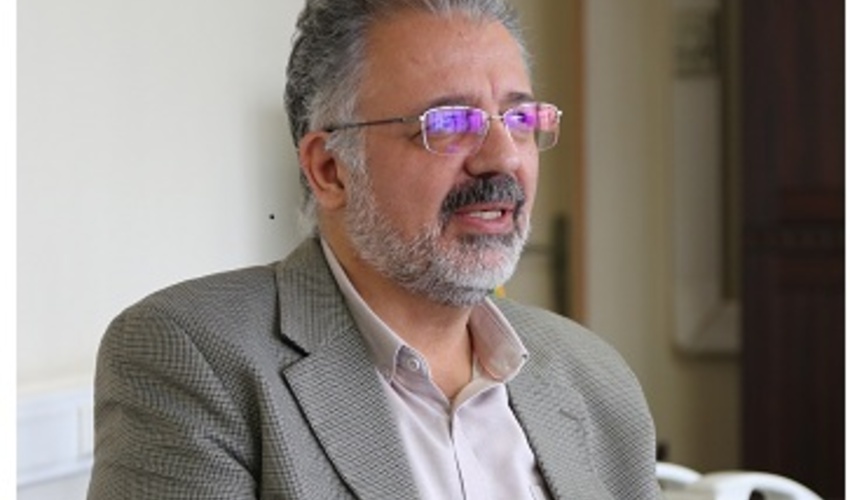
In an exclusive overview of the strategic direction and capabilities of one of Iran's premier academic institutions, Dr. Babak Nadjar Araabi, Dean of the College of Engineering / School of Electrical and Computer Engineering at the University of Tehran, outlined the faculty's pivotal role in driving national technological advancement. He emphasized its unique interdisciplinary nature, deep industry ties, and its hosting of the country's most extensive artificial intelligence research collective, positioning it as a cornerstone for addressing the nation's fundamental technological needs.
Speaking on the faculty's historical and contemporary significance, Dean Najjar A'rabi stated, “The Faculty of Electrical and Computer Engineering holds exceptional importance. A vast portion of the advanced technologies that have shaped human life over the past century have emerged from the bedrock of electrical and computer engineering.” He noted that while electricity was the primary flagbearer in the early 20th century, computing steadily cemented its role, and today, the fusion of these two domains is the driving force behind modern innovations.
A Deliberate Fusion for Modern Challenges
The dean highlighted a key strategic decision, contrasting his faculty's structure with global trends: “Unlike many universities in Iran and worldwide that separated their electrical and computer engineering departments in the 1980s, the University of Tehran, with the foresight of visionary professors like Dr. Karo Lucas, the father of Iranian AI, preserved these two fields within a single faculty. The benefits of this integration are now clearly evident.”
This foundation has fostered a naturally interdisciplinary environment. The faculty has established robust collaborations with numerous schools within the university, including the Faculty of Psychology in cognitive neuroscience, the Faculty of Mechanical Engineering in electric vehicles and energy, the Tehran University of Medical Sciences in cancer diagnosis and treatment, and even the Faculty of Fine Arts in intelligent design.
Home to the Nation's Premier AI Powerhouse
A central pillar of the faculty's work is its Artificial Intelligence group. “This faculty hosts the largest AI research group in the country,” Dr. Najjar Araabi emphasized. “Including core and affiliated members, it comprises around 20 faculty members, a capacity that surpasses that of entire departments in many universities across Iran. It is a highly active group covering diverse aspects of AI.”
This capability is translating into significant projects, including the design of an AI assistant for the Minister of Petroleum and research collaborations with Bank Mellat that led to the establishment of a joint research institute.
Bridging Academia, Industry, and Medicine with Tangible Results
The faculty actively tackles the challenge of sustainably integrating graduates into the workforce. Initiatives like co-op programs bring industry into the university, forming student teams and clarifying career pathways. A “venture faculty” model fosters effective links between industry, the private sector, and academia, transforming industrial research questions into student projects.
Interdisciplinary research is yielding groundbreaking results. A collaboration with the Royan Institute on a Parkinson's disease treatment project has progressed beyond animal testing, showing “miraculous results” in human trials, according to the dean.
Navigating the Future: Data, Ethics, and Adaptability
On the broader implications of AI, Dean Najjar Araabi acknowledged both opportunity and responsibility.
“AI creates opportunities previously impossible, such as delivering quality education to underserved regions,” he said.
However, he stressed that “ethics and data governance in this domain have become critically important, and we need clear laws and regulations. AI should not create fear or simply eliminate jobs.”
He identified data as the most crucial factor for AI's success in industry. “If industries properly collect their data, AI can leverage it to improve processes and reduce costs.”
Concluding on the pace of technological change, the dean noted the increasing difficulty of technological forecasting. “Many future jobs are unpredictable,” he said, advising that today’s students “must be receptive to change and maintain their intrinsic motivation.” He expressed confidence that equipping major national industries with intelligent tools through AI would significantly enhance their competitiveness.
With its unique combined structure, premier AI research capacity, and a clear focus on interdisciplinary and industry-relevant innovation, the Faculty of Electrical and Computer Engineering at the University of Tehran asserts its role as a central engine for Iran's technological future.
Your Comment :